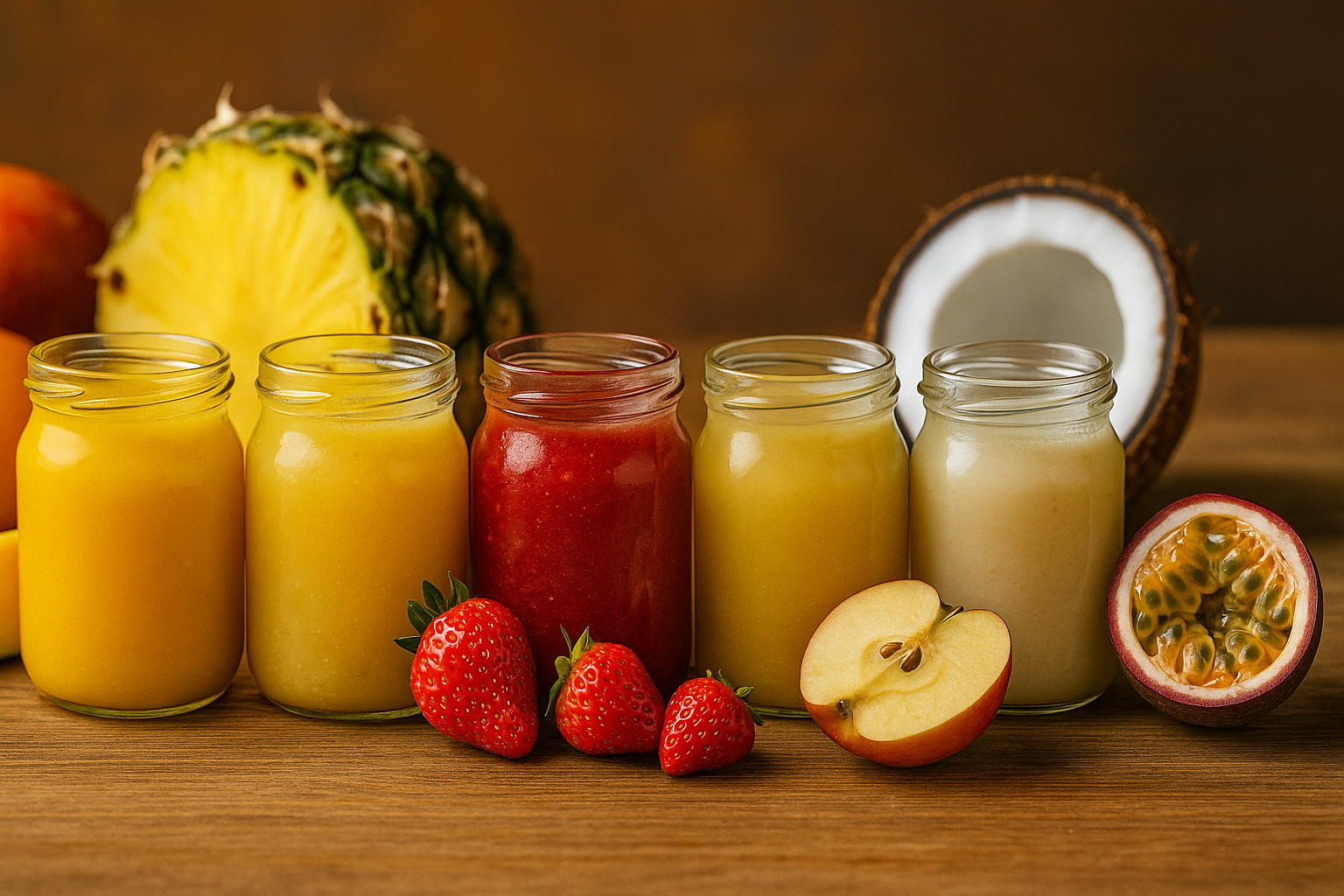
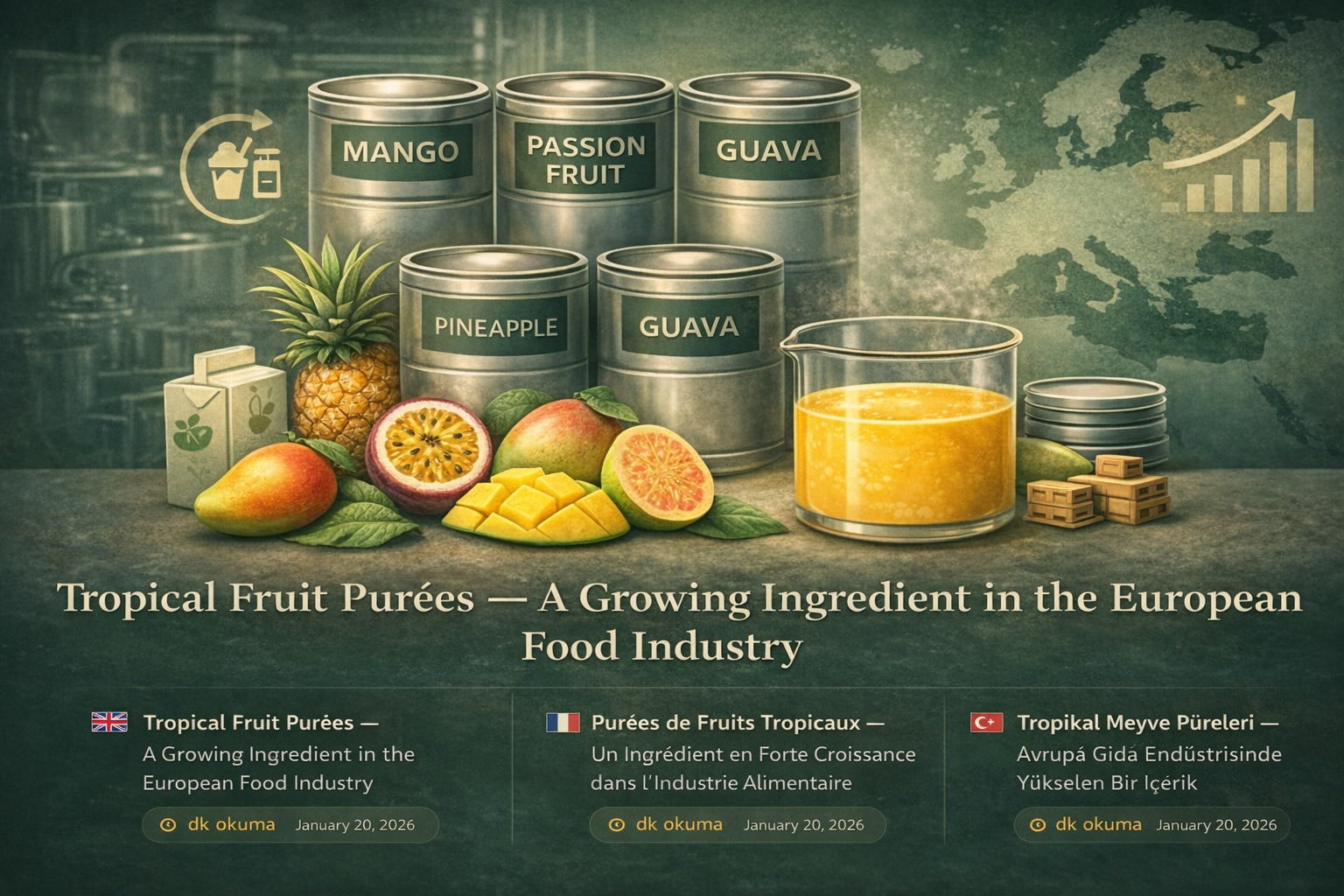
Over the past decade, tropical fruit ingredients have experienced significant growth across the European food industry. Consumers increasingly seek exotic flavours, natural ingredients and authentic fruit content, encouraging manufacturers to integrate tropical fruit purées into a wide range of food and beverage products.
As a result, ingredients such as mango purée, passion fruit purée, pineapple purée and guava purée have become essential components in modern product development.
Tropical fruit purées offer manufacturers the opportunity to combine intense flavour profiles with natural fruit authenticity, making them highly attractive for premium and innovative food products.
Why Tropical Fruit Purées Are Gaining Popularity
Several factors explain the increasing demand for tropical fruit purées in Europe.
First, the European beverage and dessert markets have shifted strongly toward natural fruit-based formulations. Consumers now prefer products that contain higher fruit content and fewer artificial additives.
Second, tropical fruits offer distinct aromatic profiles that differentiate products in competitive markets.
Finally, the growing popularity of global cuisine and exotic flavours has encouraged manufacturers to experiment with tropical ingredients.
Key Tropical Fruit Purées Used in Industrial Production
Mango Purée
Mango purée is one of the most widely used tropical fruit ingredients in the global food industry.
Industrial processors commonly use mango varieties such as:
- Alphonso
- Totapuri
- Kent
Mango purée is particularly popular in:
- smoothies
- yogurt preparations
- ice cream
- fruit desserts
- beverage blends
Its natural sweetness and bright colour make it ideal for premium formulations.
Passion Fruit Purée
Passion fruit purée is known for its high acidity and intense tropical aroma.
These characteristics make it extremely valuable for balancing sweetness in beverages and desserts.
Typical applications include:
- cocktail bases
- sorbets
- dairy drinks
- pastry creams
- tropical sauces
Pineapple Purée
Pineapple purée offers a fresh and balanced sweet-acid profile that works particularly well in beverage blends.
Common industrial uses include:
- juice blends
- yogurt fruit preparations
- frozen desserts
- pastry fillings
Guava Purée
Guava purée is highly valued for its aromatic complexity and vibrant colour, especially in pink guava varieties.
Industrial applications include:
- nectar beverages
- smoothie blends
- tropical dessert sauces
- yogurt flavourings
Industrial Applications Across the Food Sector
Tropical fruit purées are now used in many product categories across the European food industry.
These include:
- functional beverages
- dairy products
- plant-based yogurt alternatives
- frozen desserts
- pastry and confectionery
Their natural flavour intensity allows manufacturers to create high fruit content products with minimal additives.
Supply Chain and Sourcing Considerations
The production of tropical fruit purées typically takes place in regions where these fruits grow naturally.
Major sourcing regions include:
- India
- Vietnam
- Thailand
- Peru
- Ecuador
Ensuring consistent quality requires reliable partnerships with fruit processors and careful control of variety selection, processing conditions and aseptic packaging.
Conclusion
As consumer demand for natural fruit ingredients continues to grow, tropical fruit purées will remain an essential component in innovative food product development.
Their strong flavour profile, natural image and versatile applications make them one of the most dynamic ingredient categories in the European food industry.
With global sourcing expertise and strong relationships with fruit processors, Scala Nuova supports food manufacturers in sourcing high-quality tropical fruit ingredients tailored for industrial production.
Frequently Asked Questions
Which tropical fruit purees are most used industrially?
Mango, passion fruit, pineapple and guava purees are the essential components in modern tropical product development.
Which mango varieties are used industrially?
Alphonso, Totapuri and Kent are the varieties most commonly used by industrial processors.
Why is passion fruit puree valued in formulation?
Its high acidity and intense tropical aroma make it extremely valuable for balancing sweetness in beverages and desserts.
What gives pink guava puree its appeal?
Its aromatic complexity and vibrant color, which make it especially attractive for nectar beverages, smoothie blends and yogurt flavouring.
Where are tropical purees typically sourced from?
Major sourcing regions include India, Vietnam, Thailand, Peru and Ecuador, where these fruits grow naturally.
What food categories use tropical purees most?
Functional beverages, dairy products, plant-based yogurt alternatives, frozen desserts, and pastry and confectionery.